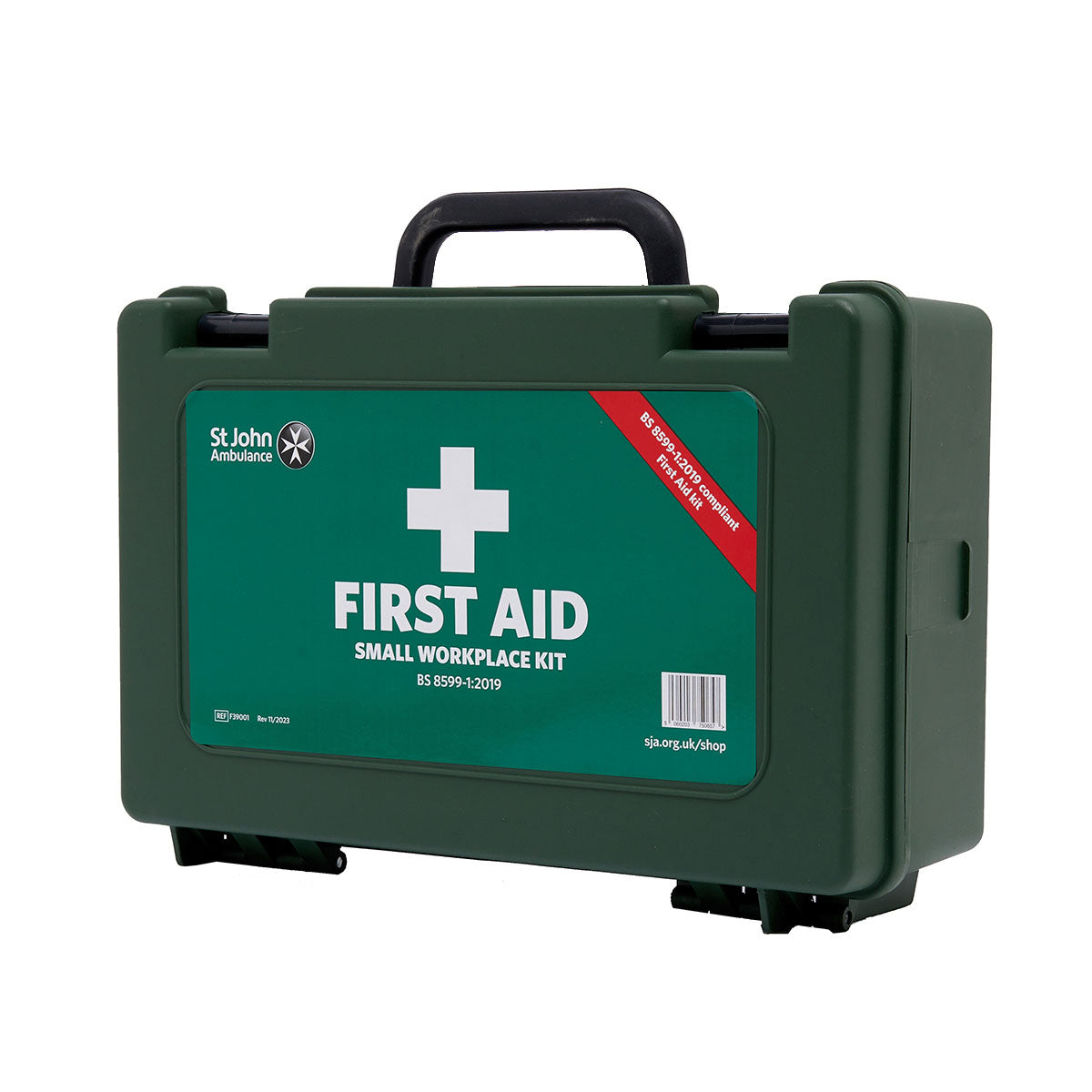
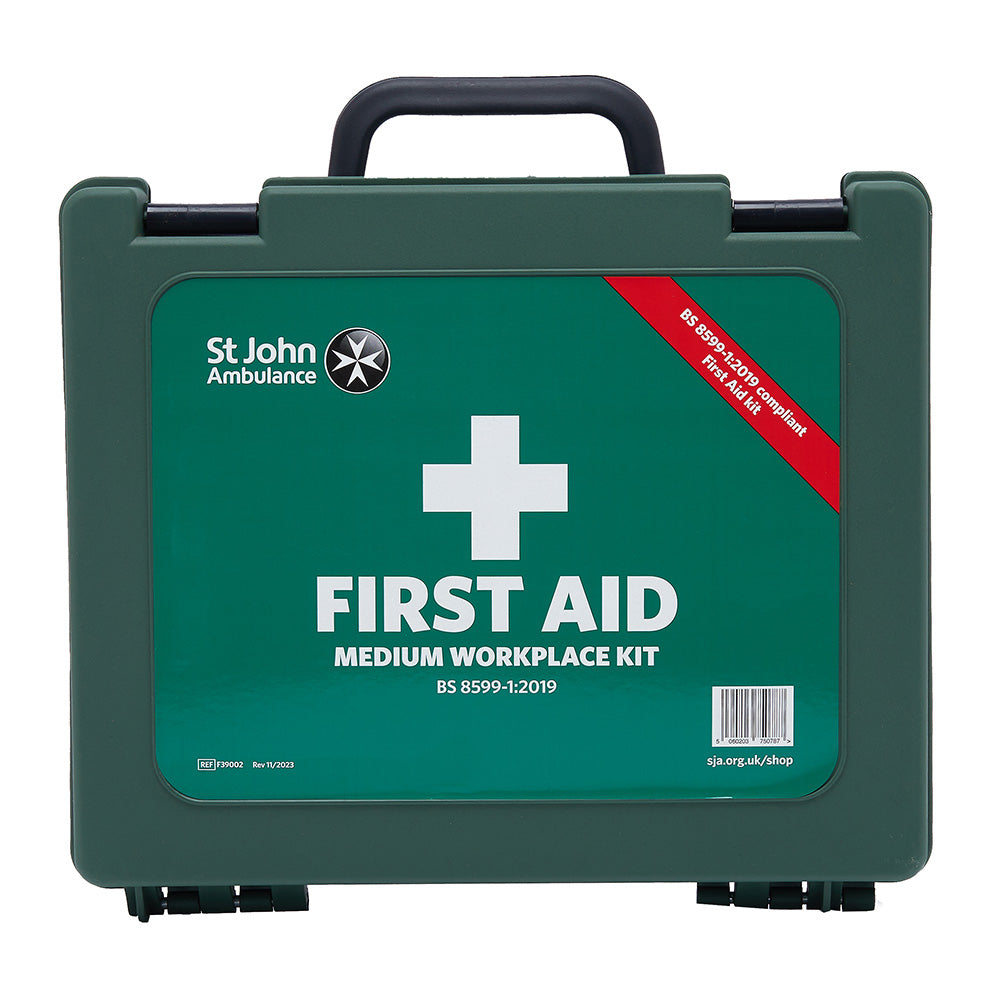
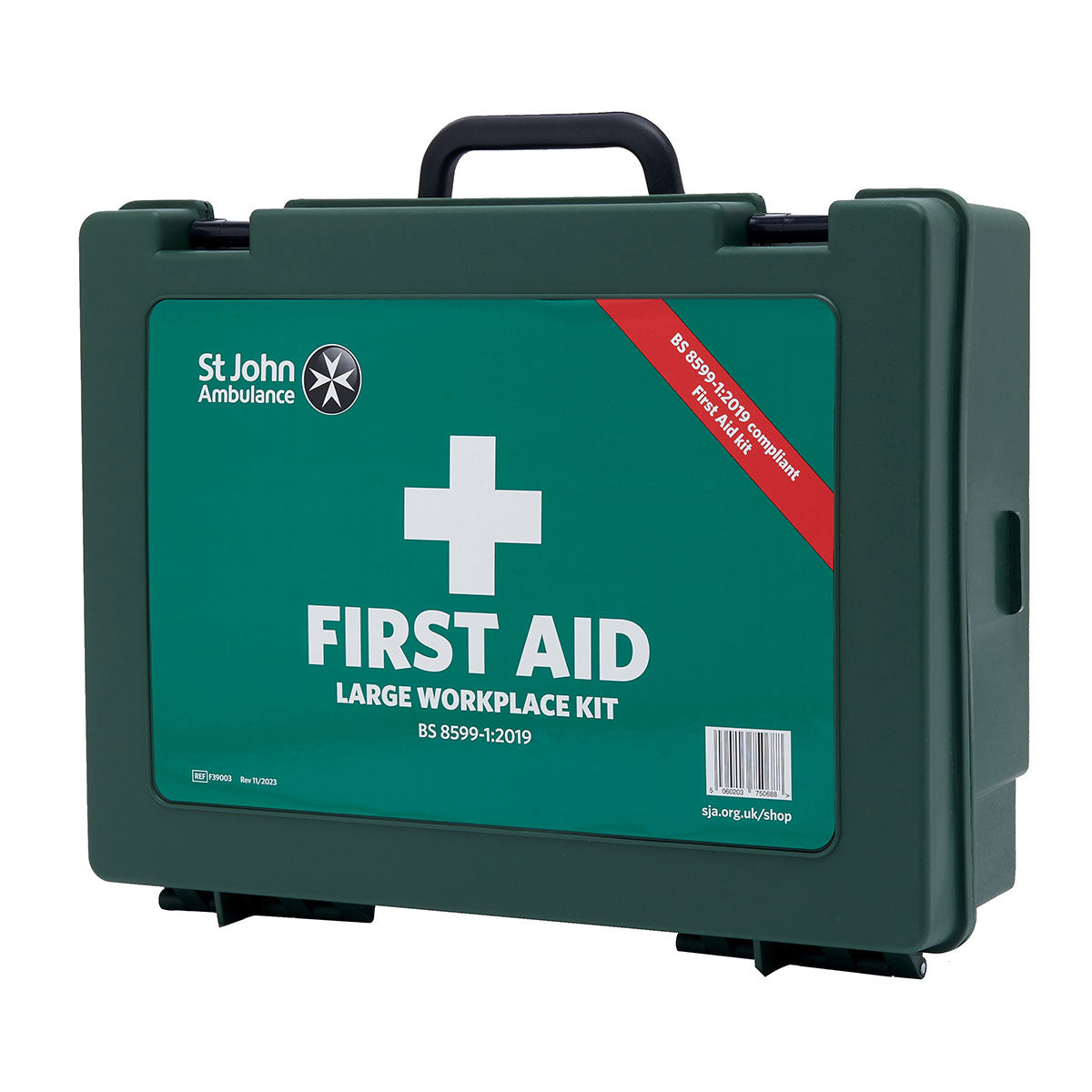
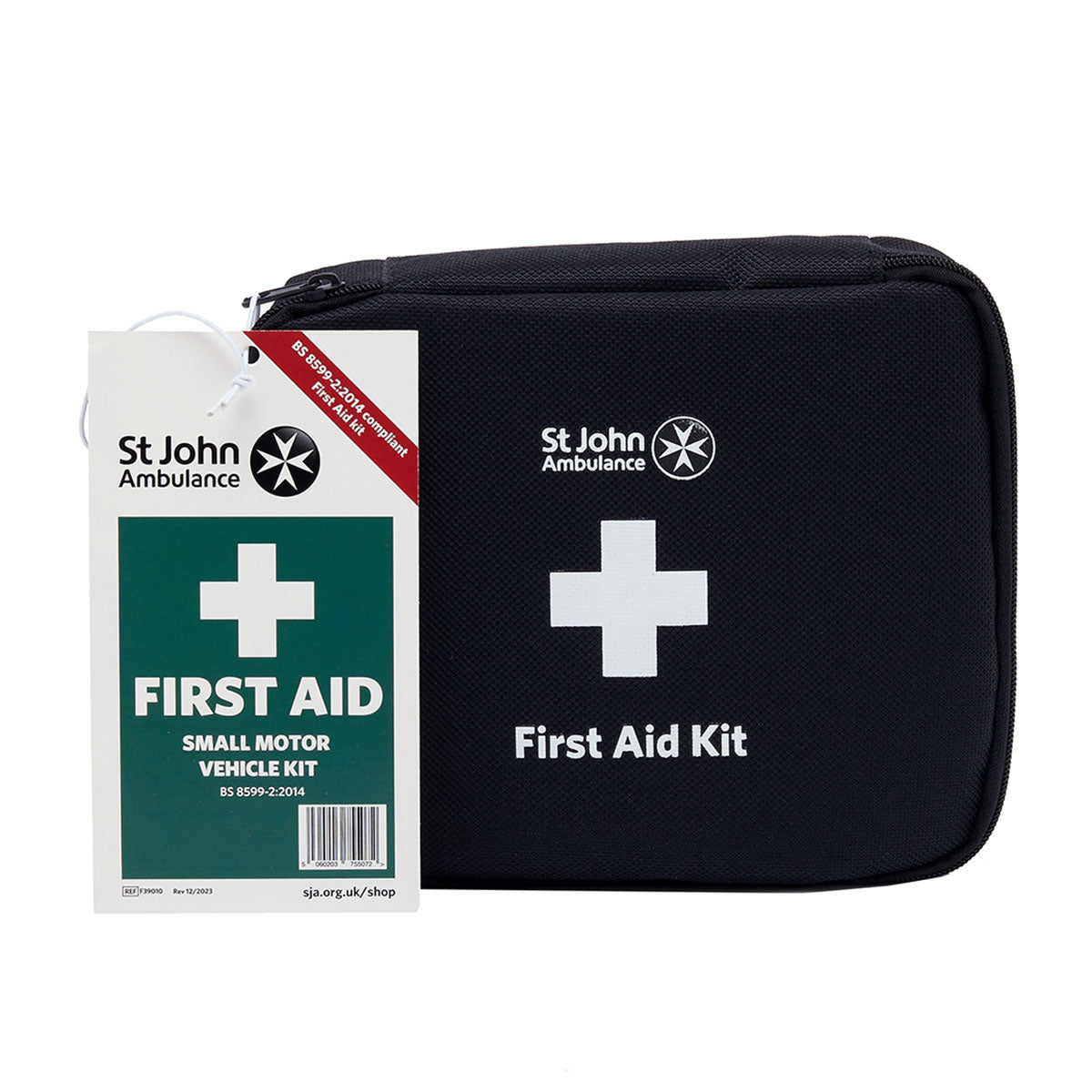
- What first aid supplies should every UK workplace have?
- Every workplace needs first aid provision matched to its risk assessment: at least one BS 8599-1 kit sized to the headcount and risk level, plus eyewash where there is a splash or dust risk, burns provision where there are hot processes, PPE such as nitrile gloves for the first aider, and an accident book. Many sites also hold a defibrillator, a body fluid spill kit and vehicle kits for mobile staff.
- How do I choose between a small, medium and large first aid kit?
- Use risk level and headcount. Low-risk workplaces: small up to 25 people, medium 25 to 100, large over 100. Higher-risk workplaces: small up to 5, medium 5 to 25, large over 25. Extra floors, buildings, shifts and vehicles need their own kits rather than one larger kit.
- Do first aid supplies have expiry dates?
- Yes. Sterile dressings, plasters, wipes, eyewash solution, hydrogel burn dressings and gloves all carry expiry dates, and defibrillator pads and batteries do too. Expired items should be replaced because sterility and performance are no longer assured.
- What is the difference between an AED and a defibrillator?
- AED stands for automated external defibrillator, which is the type of defibrillator designed for use by first aiders and members of the public. It analyses the heart rhythm and only advises a shock when one is needed, guiding the user by voice through the process.